MC1R Gene: Why Red Hair Is So Rare

Reading time: 7 minutes
Only about 1-2% of the world's population has natural red hair, a genetic quirk that traces back to a specific mutation of the MC1R gene. While blonde and brown hair dominate in many regions of the world, red hair remains an absolute rarity. The answer to this rarity lies deep in our DNA, specifically on chromosome 16.
The MC1R gene controls the production of melanin and therefore determines not only hair color, but also skin tone and freckles. But what makes this genetic variation so extraordinary? And why are redheads concentrated mainly in certain geographic regions?
What Is the MC1R Gene and Where Is It Located?
The MC1R gene is located on chromosome 16 and encodes the melanocortin 1 receptor. This receptor sits on the surface of melanocytes, the cells responsible for producing melanin. In people without an MC1R mutation, this receptor mainly produces eumelanin, which creates brown to black pigmentation.
In redheads, however, a specific mutation is present. As a result, the receptor mostly produces pheomelanin instead, a reddish-yellow pigment. According to a study from the University of Edinburgh in 2000, more than 80 different variants of the MC1R mutation exist.
The discovery of the MC1R gene as the main culprit behind red hair was made in 1995 by scientists led by Jonathan Rees. His research laid the foundation for understanding the genetics of red hair and was published in the journal Nature Genetics.
How Is Red Hair Inherited?
Red hair is inherited in a recessive pattern. In practical terms, this means both parents must carry at least one copy of the MC1R mutation for a child to be born with natural red hair. Even if both parents carry the mutation, the chance of having a redheaded child is only 25%.
Interestingly, parents without red hair can also have a redheaded child, as long as both carry the recessive variant. This genetic setup explains why red hair sometimes skips generations. In 2014, the BBC reported on a British family in which a redheaded child was unexpectedly born after three generations.
The Role of Chromosome 16
Chromosome 16 is one of the smaller human chromosomes and carries about 3% of all genetic material. The MC1R gene spans a region of roughly 1,000 base pairs. This comparatively tiny genetic sequence has an enormous influence on outward appearance.
Besides hair color, the MC1R gene affects other traits as well. Redheads often have lighter skin, more freckles and a heightened sensitivity to UV radiation. These traits are directly tied to the altered melanin production.
Why Is Red Hair So Rare Worldwide?
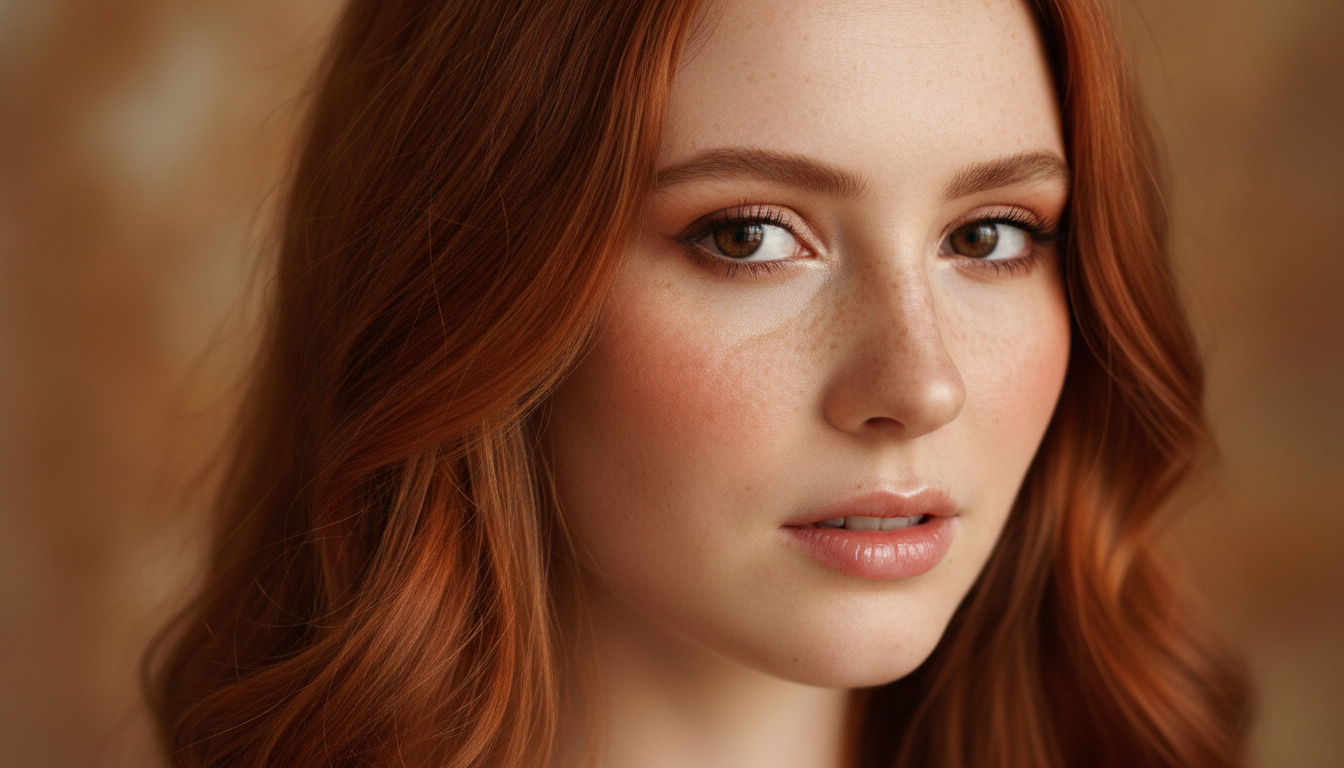
The extreme rarity of red hair has several causes. First, recessive inheritance requires both parents to be carriers of the mutation. In a globally mixed population, the odds of that drop considerably. Second, the MC1R variants are geographically concentrated in certain regions, mainly in Northern Europe.
Scotland and Ireland have the highest shares of redheads in the world, at 10-13% and 10% respectively. This concentration likely arose through geographic isolation and genetic drift over thousands of years. A 2018 study by Eupedia shows that outside these core regions, the share drops dramatically to below 0.5%.
In countries like China, Japan or most African nations, natural red hair is practically nonexistent. The global distribution of red hair makes this extreme geographic concentration strikingly clear.
Evolutionary Factors Behind the Rarity
From an evolutionary standpoint, the MC1R mutation offered an advantage in northern latitudes. Lighter skin allowed more efficient vitamin D synthesis in low sunlight. At the same time, the mutation came with drawbacks in sun-intense regions: a higher risk of sunburn and skin cancer.
This geographic adaptation explains why the MC1R variants never spread globally. Near the equator, the mutation was a clear disadvantage, while in Scandinavia, Scotland and Ireland it was beneficial.
Scientific Facts About the MC1R Mutation
In 2012, the National Institutes of Health published a comprehensive study on MC1R variants. The researchers identified several specific mutations that are especially often associated with red hair:
- The R151C variant is found in about 80% of all redheads of European descent
- The R160W mutation is particularly common in Scotland
- The D294H variant often occurs in combination with other mutations
- Over 30% of redheads carry more than one MC1R mutation at the same time
These variants affect not only the hair color but also the intensity of the red tone. The range runs from delicate strawberry blonde through vivid copper to deep mahogany. Each shade reflects a different combination of MC1R variants.
Medical Implications
The MC1R gene also has medical relevance. Several studies show that people with MC1R mutations respond differently to pain medication. A 2004 study from the University of Louisville found that redheads need about 20% more anesthesia than people with other hair colors.
There is also an elevated melanoma risk. According to Cancer Research UK, people with two copies of the MC1R mutation have up to a 4-fold higher risk of skin cancer, regardless of actual sun exposure. This finding underlines the far-reaching effects of this genetic variation.
Red Hair Genetics in the Dating Context
The rarity of red hair makes redheaded women especially desirable in the dating world. Many men see genetic uniqueness as an extra attractiveness factor. In the sugar dating segment, platforms report disproportionately high interest in redheaded sugar babies.
The scientific explanation for this attraction partly lies in evolutionary psychology. Rare traits signal genetic diversity and are unconsciously perceived as valuable. A study on the psychology of attraction to copper-colored hair confirms this effect.
For redheaded women, this knowledge offers a clear advantage in dating. Being aware of your own genetic distinctiveness can boost your self-confidence. The link between genetic uniqueness and confident presence is no coincidence.
The Future of MC1R Gene Research

Research on the MC1R gene continues to advance. Geneticists are currently investigating whether the frequency of red hair will decline further through global migration and mixing. Model calculations from Oxford University in 2019 predict a slight decline over the next 100 years.
At the same time, CRISPR technology theoretically opens up new possibilities. In the future, scientists could edit MC1R variants in a targeted way, whether for medical reasons or for cosmetic purposes. Ethical debates about such interventions are already under way.
The forensic application is also interesting. Since 2013, forensic scientists have used MC1R gene analysis to infer a suspect's hair color from DNA traces. The hit rate is around 90% for red hair, significantly higher than for other colors.
FAQ: Common Questions About the MC1R Gene
Can two brown-haired parents have a redheaded child?
Yes, absolutely. If both parents each carry a recessive MC1R mutation, there is a 25% chance their child will have red hair. Both parents can have brown hair on the outside and still pass on the genetic blueprint for red hair.
Is red hair really going to die out?
No, this fear is scientifically unfounded. As long as people carry the MC1R mutation, redheaded children will keep being born. The frequency may drop slightly due to global mixing, but the gene itself won't disappear.
Why do redheads often have freckles too?
Freckles result from uneven melanin distribution in the skin. The same MC1R mutation that causes red hair also leads to this irregular pigmentation. About 90% of redheads develop freckles, especially with sun exposure.
Is the MC1R gene only responsible for hair color?
No, the MC1R gene influences multiple traits. Besides hair color, it determines skin tone, freckle formation, pain sensitivity and even the response to certain medications. It is a pleiotropic gene with a wide range of effects.
Can genetic tests predict whether my child will have red hair?
Yes, modern genetic tests can analyze both parents' MC1R variants and calculate a probability. However, other genetic factors also play a role, so the prediction isn't 100% certain.
Conclusion: The Genetic Treasure of Red Hair
The MC1R gene on chromosome 16 makes red hair one of the rarest natural hair color phenomena in the world. Recessive inheritance, combined with geographic concentration, explains why only 1-2% of the world's population carries this genetic trait. The more than 80 different MC1R variants create a fascinating variety of red shades.
For redheaded women, this knowledge means more than just genetic facts. It underscores their natural uniqueness, an aspect that can be a considerable advantage in dating and especially in sugar dating. Understanding the scientific basis of your own attractiveness strengthens your self-confidence for the long term.
Discover more about the fascinating world of redheaded women and use your genetic distinctiveness as a strength. Whether in dating, at work or in everyday life, red hair is not a whim of nature but a rare genetic gift with a proven scientific basis.